You’re performing a heavy bench press, the bar comes down to your chest, and you try as hard as you can to get the bar up off your chest, but it won’t budge.
Is this just because you’re not, “strong” enough. Strength here represents the amount force you can produce to resist and overcome the force applied to you by the bar and gravity.
Force is mass times acceleration, we have a certain bar mass, and it’s accelerating at a specific rate towards your chest, in order to get the bar off your chest, you have to apply a greater amount of force into the bar than the bar into you.
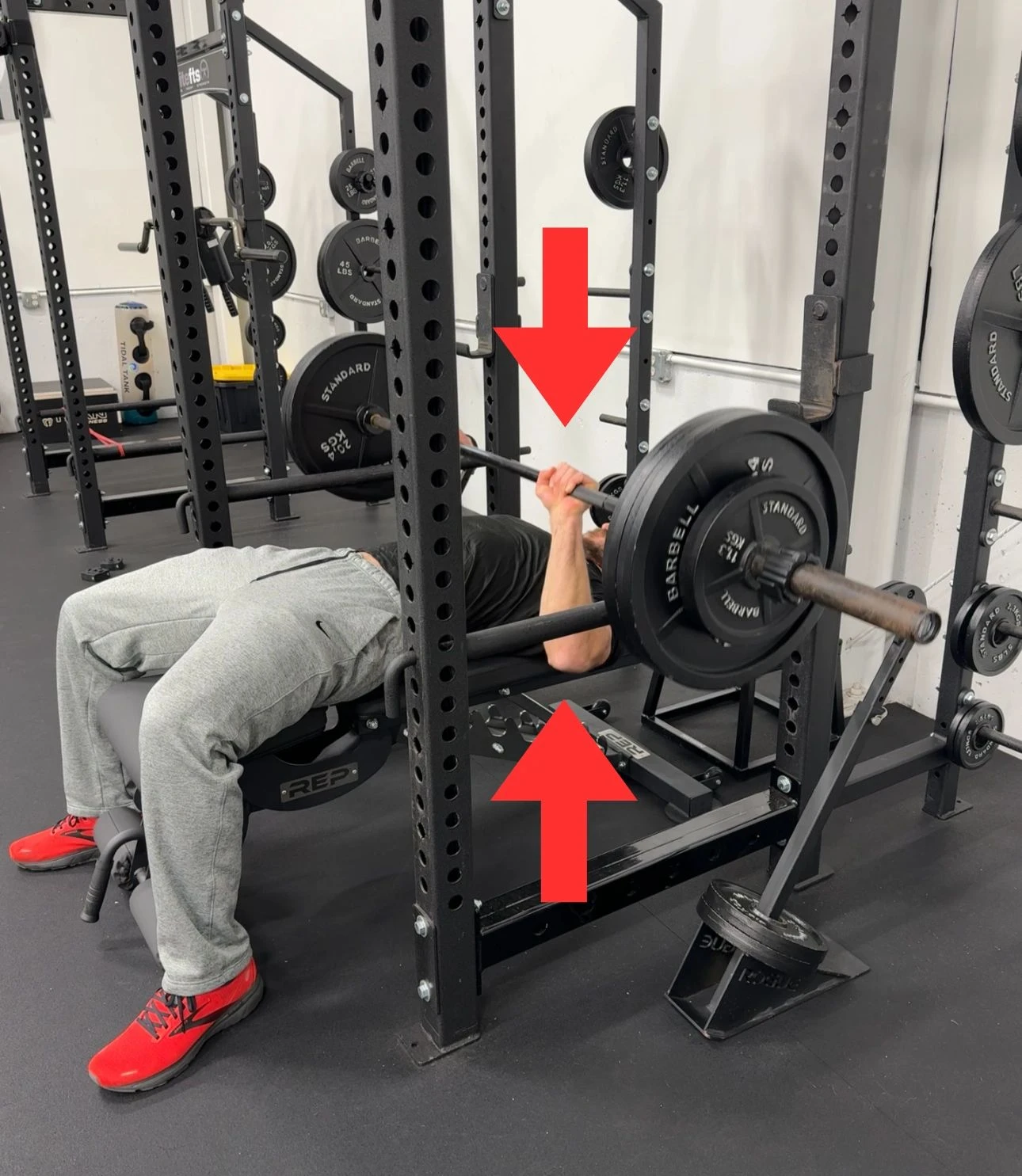
What's often not considered is the pressure that's also coming from the top of the body down towards the lower body.
Take this toothpaste squeezing image below...
Think about the finger pushing down applying a downward force, just like the bar during the bench press. Now consider how the pressure applied to the tube, affects the toothpaste. See below how the downward pressure drives the toothpaste flow towards the bottom or end of the tube.

So how would force and pressure need to be represented inside of the tube to prevent the toothpaste from coming out? Applying this line of thinking to resistance training, the image below shows both the vertical and horizontal pressures during the bench press.
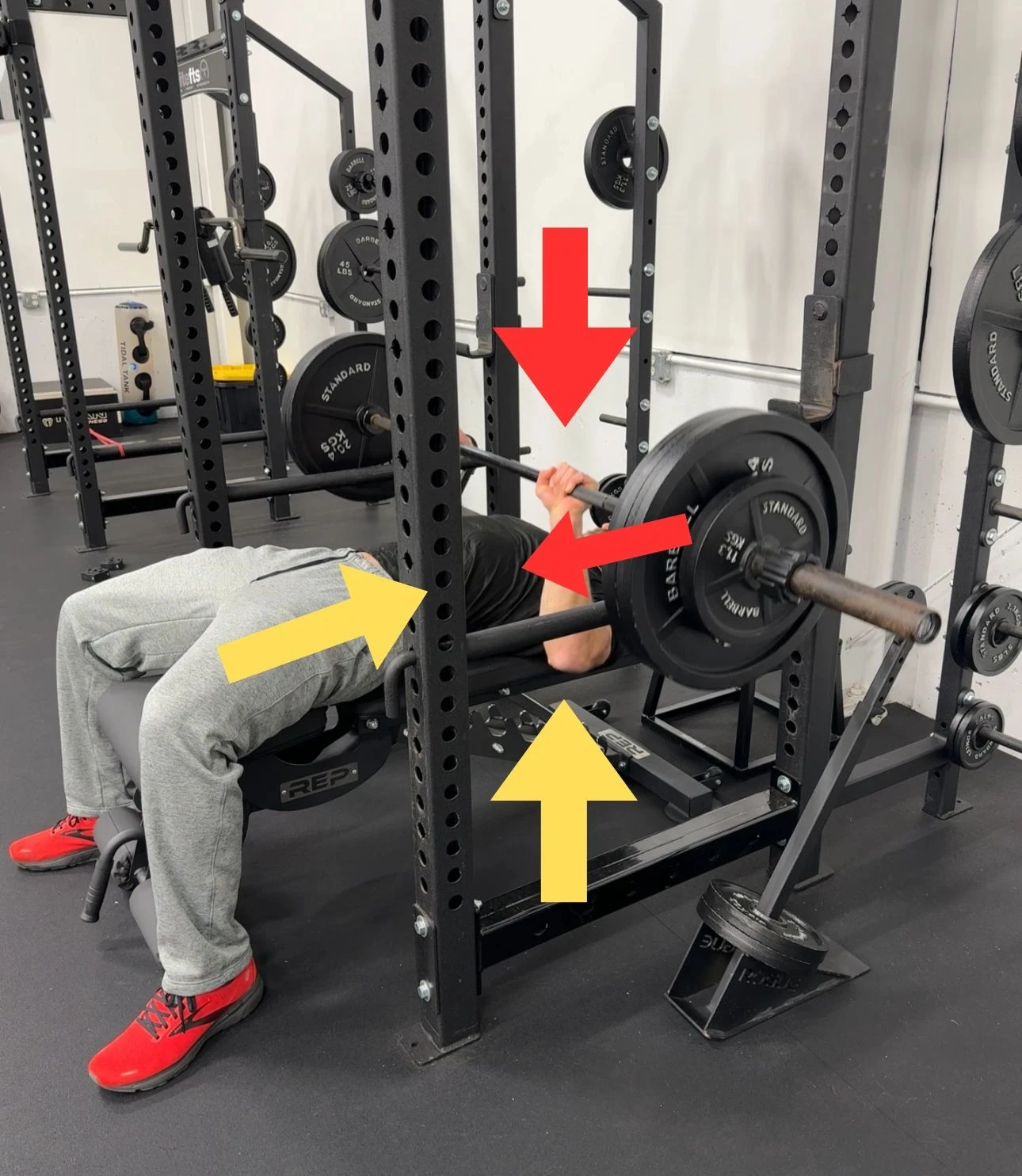
Here the red arrows represent the pressures applied by the bar, and the yellow arrows represent the higher pressures that I need to generate inside of the body to successfully push the bar up off my chest.
So while some may think about the bench press as a, "chest strength" exercise. It may be more valuable to consider the entire system and the forces and pressures involved during resistance training.